After I speak to groups, one of the common questions, often in the form of an accusation or something, is, "Just how autistic are you? You seem so normal." Yes, seeming "normal" is how one survives and earns a living. Then again, be "abnormal" enough and you can also earn a living, but that's not the path I've decided to follow.
On most days, probably 95 or more out of 100, I convince myself that I not only appear normal but that I am "normal" — or as normal as anyone else I know. But, on the difficult days or even during the difficult hours, I know I'm different.
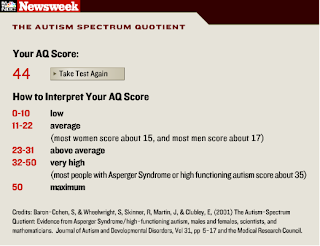
Recently, a colleague posted links to Facebook for two online "personality tests" that supposedly measure autistic traits. I've taken both before, and I recall the ASQ score was 42. But, I was curious and answered the questionnaires again.
If you believe such things (and I question their validity), the answer to how autistic I am… very.

As for the ASQ, my score has risen from 42 to 44. I suppose am more of a loner than I was two or three years ago. After my last employment experience, that's not surprising. Thankfully, I love my new job and I am increasingly engaged with coworkers and my students.
I realize I could post various reports from experts and people would still question if the "Autistic Me" is written by an authentic autistic person. The answer is simple: the blog is written by me. Whatever that means.

On most days, probably 95 or more out of 100, I convince myself that I not only appear normal but that I am "normal" — or as normal as anyone else I know. But, on the difficult days or even during the difficult hours, I know I'm different.
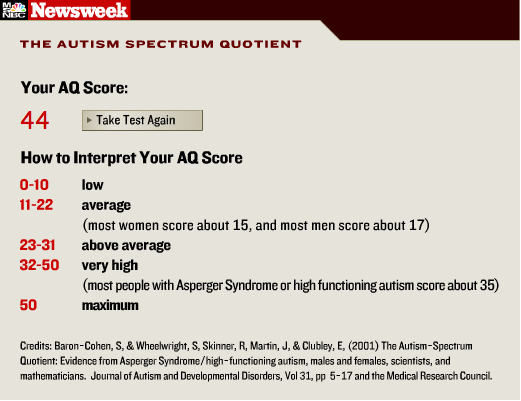
Recently, a colleague posted links to Facebook for two online "personality tests" that supposedly measure autistic traits. I've taken both before, and I recall the ASQ score was 42. But, I was curious and answered the questionnaires again.
If you believe such things (and I question their validity), the answer to how autistic I am… very.

As for the ASQ, my score has risen from 42 to 44. I suppose am more of a loner than I was two or three years ago. After my last employment experience, that's not surprising. Thankfully, I love my new job and I am increasingly engaged with coworkers and my students.
I realize I could post various reports from experts and people would still question if the "Autistic Me" is written by an authentic autistic person. The answer is simple: the blog is written by me. Whatever that means.
I just re-took it... I remembered being in the normal range and now I got a 4. My daughter is in the spectrum so I've taken most of the quizzes out there just in case : )
ReplyDeleteDo you mind sharing the link to this test you take? Thank you.
ReplyDeleteI found both via Google. Look for "Aspie Quiz" and "ASQ" to locate links. The links have changed over time.
ReplyDelete